Mahir Şaul
[email protected]
A personal response to a video clip which was originally shared on the website Ekşi Sözlük, one of the largest online communities in Turkey.[1] I can no longer find it there, but it is available on X.
The clip is three minutes long and shot on a personal phone, apparently on impulse. The author gives the date as June 17, 2023. He makes no attempt to display artfulness or good production values. He simply wants to alert fellow citizens to the presence of exotic foreigners freely wandering around and shopping in a place that is close to the center of the city.
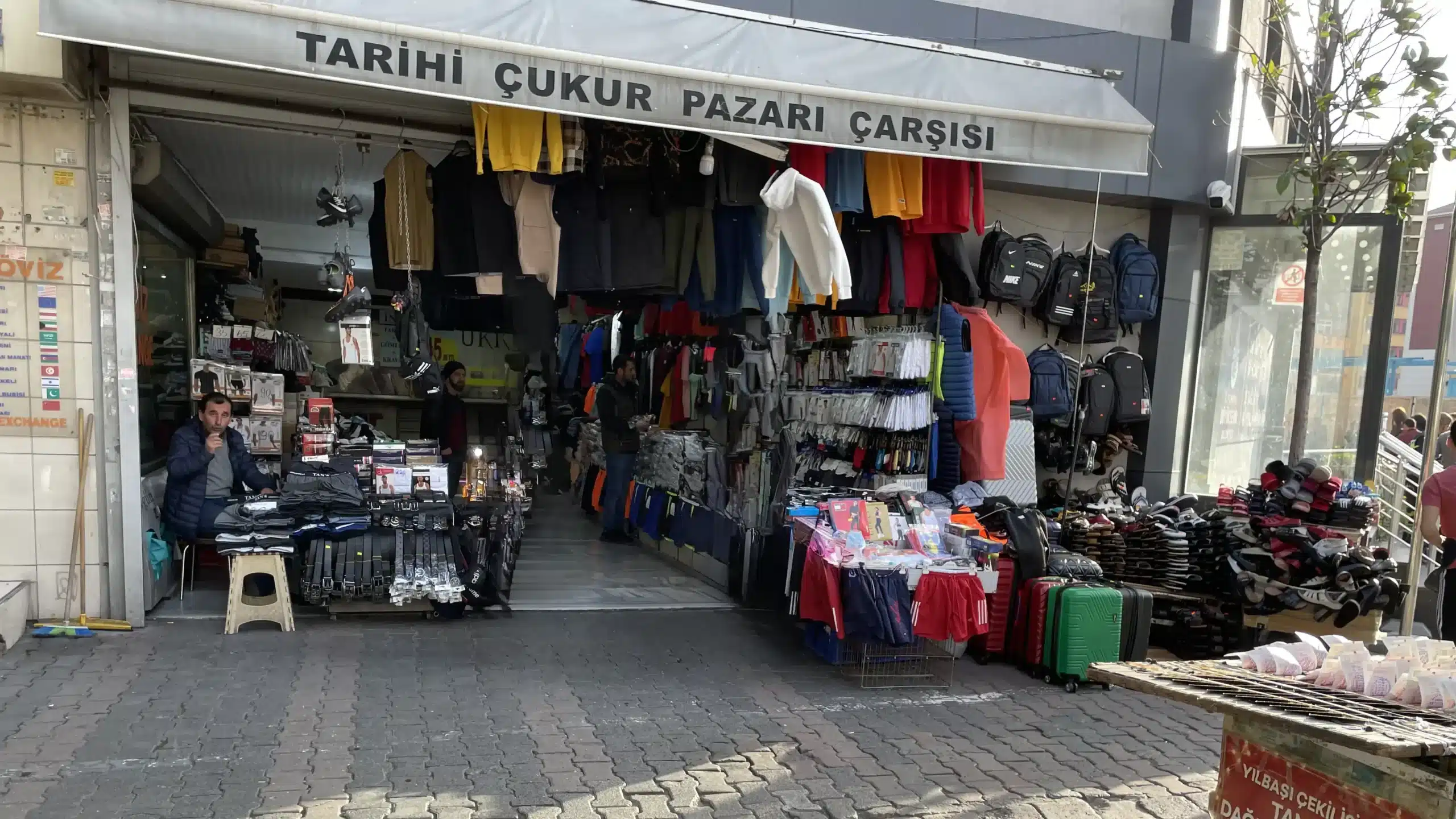
The clip is shot in the market called Tarihi Çukurpazar Gıda ve Giyim Çarşısı, a low-end shopping area in Aksaray, a major square in Istanbul. The market is little known and even many people who live nearby in the Aksaray district are not familiar with it.
Çukurpazar (‘The Pit Market’) is a small mall on two levels, both located underground. The upper level is reserved for clothing; the lower level shops are either butchers or green grocers. Variety meats have a major presence in the butcher stands. The entrance to the market lies near where the Turgut Özal-Millet Boulevard reaches Aksaray Square. A metal spiral staircase takes you to the shopping areas.[2] Aksaray square is a busy confluence of major avenues on a vast, flat plane in one of the lowest parts of the city (the former Lykos River nearing its mouth on the Marmara Sea). Major road construction projects in the late 1950s covered up the earlier creek and made it invisible. The older history of Çukurpazar that might explain the “Tarihi” (‘Historical’) adjective the front part of its official name is not clarified. Other videos and newspaper stories have store owners explain that the mall was rebuilt “80 year ago” and took its current shape after a renovation around 1980. Indeed, the structure is a reinforced concrete basement under a paved open space, which suggests a building date in the 1960s or 1970s.
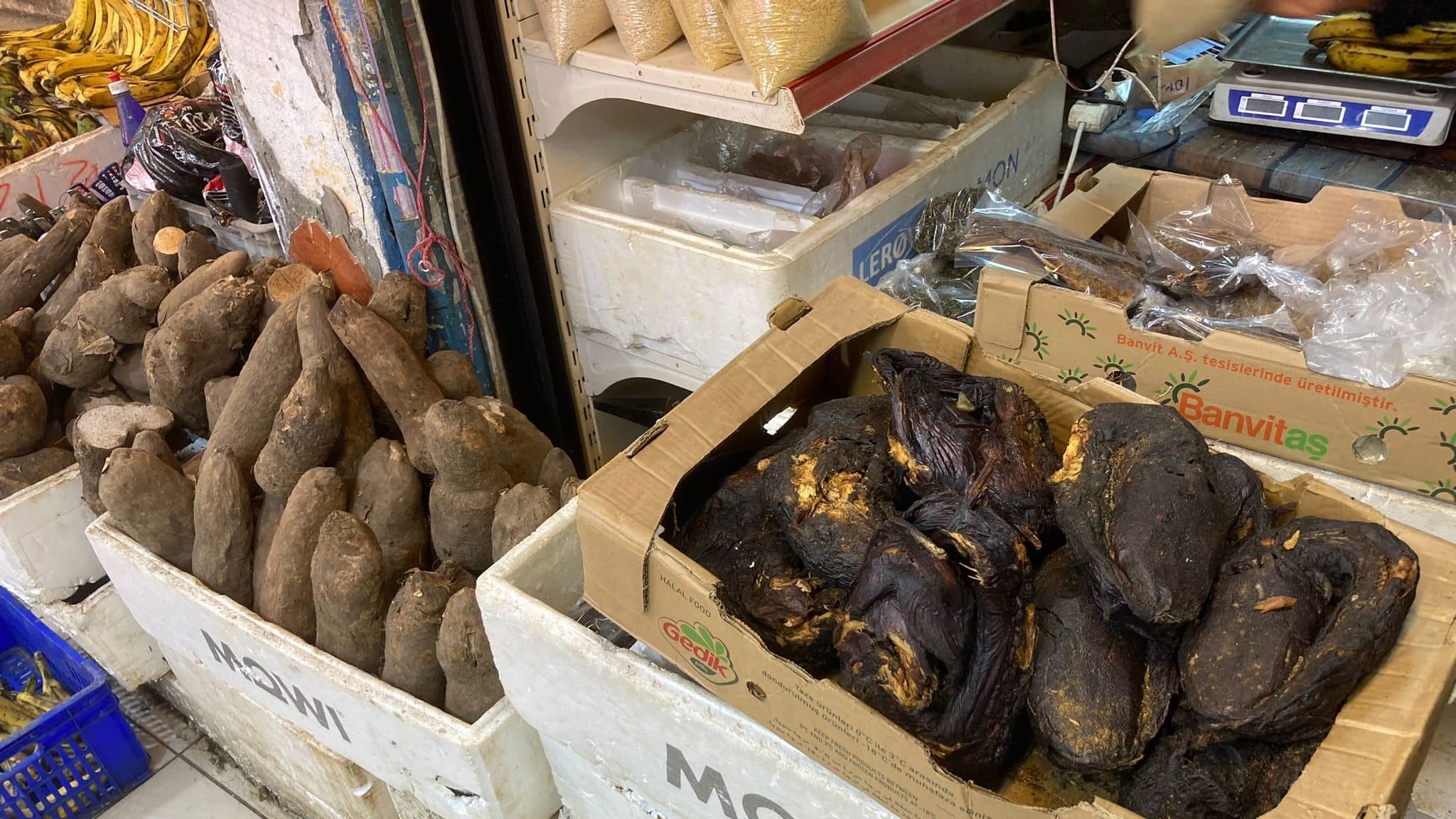
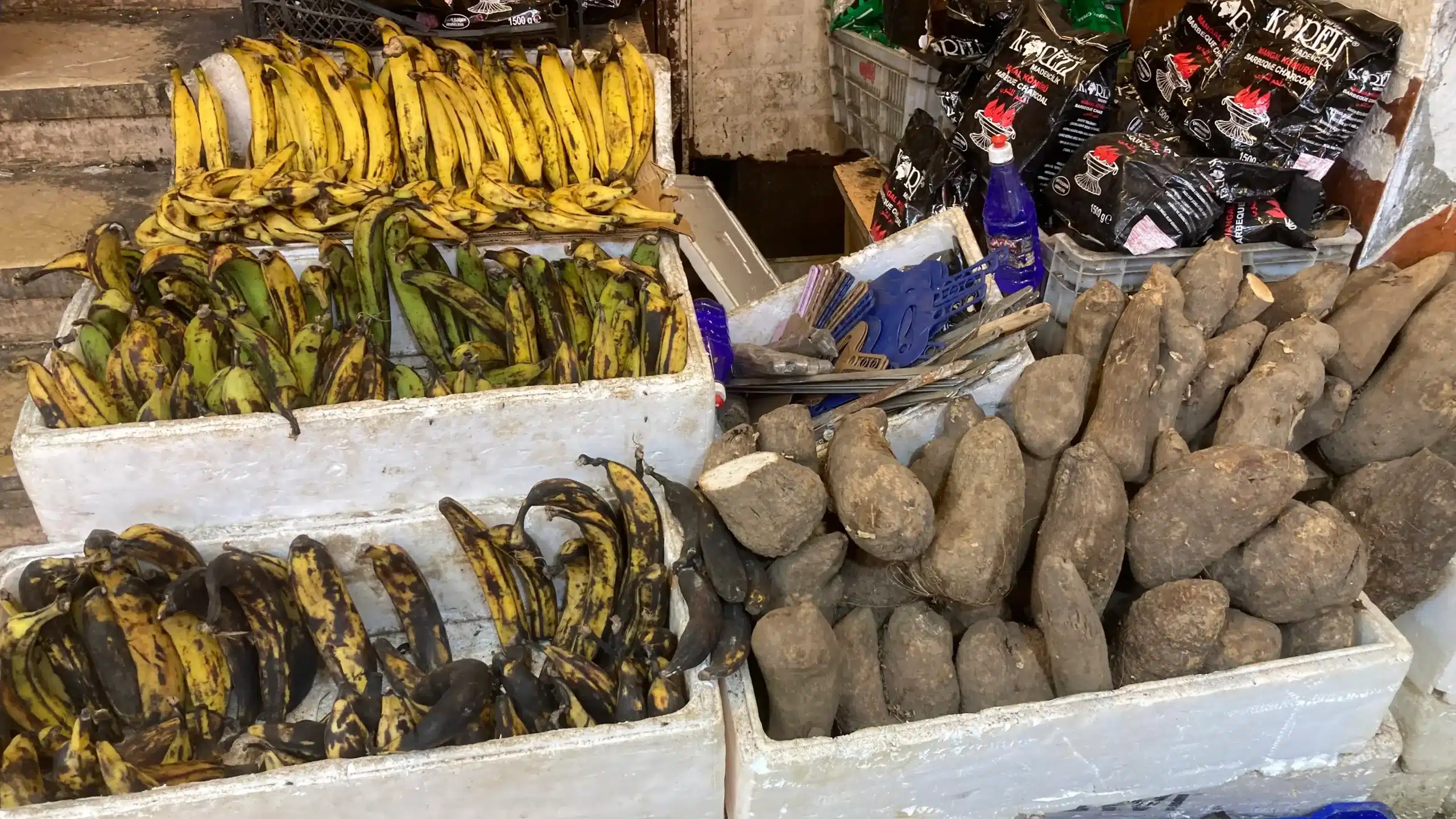
The video clip starts showing a pair of feet going down the spiral stair treads as we hear the cameraman’s voice: “İlginç” (‘interesting’), repeated twice. He explains: “İstanbul’un göbeğindeyiz” (‘We are at the heart of Istanbul’, and then for greater emphasis “Burası Türkiye’nin göbeği” (‘This is the heart of Turkey’). Verbal explanation is scarce in what follows. The cameraman lets images express what he finds objectionable. We are shown people who are black Africans wearing summer clothing. Most hold plastic shopping bags in their hand to carry their purchases. A few wear colorful print shirts, which are uncommon and were perhaps purchased in Africa, but most have unremarkable clothing. A few young men carry a backpack. The camera finds an African man who wears an ankle length cotton shirt and a Muslim style light cloth cap, and lingers on him. It follows this man from behind as he walks toward the staircase. One or two women who wear Islamic style headscarves fleetingly appear on the margin of the image; the camera does not focus on them. We hear the comment “The employees are also foreigners.”[3] We perceive one African salesperson behind a refrigerated meat counter. Most other sellers are Turkish men. As I have been to this market and know what it looks like, I note that the camera does not pick up the exotic foods like the yams (Dioscorea sp.), the plantains (cooking bananas) piled-up on some stands –some attended by African women sellers, red palm oil sold in reused PET bottles, or the packets of spices and little plastic bottles of condiments. It becomes clear that what troubles the cameraman is really the people, the persons with dark skin or a hint of foreignness in what they wear. The clincher words at the end are also not very expressive but suggestive: “Bambaşka bir yer!” (‘A totally different place!’).
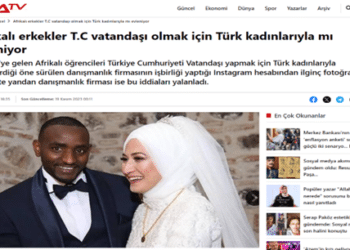
This clip is similar in feeling to an earlier posting without video, published in October 2022, also concerning Çukurpazar. The headline on that one reads: ‘Stomach Churning Scene in the Heart of Istanbul: Africans Have Captured Historical Marketplace.[4] Then it explains that most customers of this market are Africans, the reason for which people call it Afrika Pazarı (‘The African Market’).[5]
Ekşi Sözlük has a comment posted on March 15, 2022: “In this place if you wonder around as a white skinned Turk you are definitely in the minority. You see this many Africans only in Africa. You can see this many Afghans next to each other only in Afghanistan or in this market. Parts of animals you do not expect and did not know about are on sale here.”[6]
By way of contrast, I want to compare another news story of Çukurpazar that has been published in the YouTube channel EnBabaMuHaBİR. It is also filmed in the food section in the lower level of the market, is sensationalist, but has a different accent: the lack of hygiene. It is produced more professionally and throughout we hear the loud scandalized voice of the unseen reporter. The meat section in the middle of the floor draws most attention. The images present mostly the displays of offal, such as piles of calf’s feet and sheep’s heads. Occasionally a fly lands on a piece of meat, and the floors do not look clean.
One of the meat vendors behind a display case explains that the meats are actually held in refrigerated cases, but their top sliding glass doors being removed for convenience they look unsanitary to visitors. Another vendor explains that the feet and heads on sale have been fired and smoked; this is the way, he says, these meat parts were prepared for cleaning purposes and to help with preservation in former times in Turkey as well, before chemical cleaning became widespread. This process lends the grey color of smoke and produces charred spots on the skin of the parts, which makes their appearance unusual and unappealing to younger people. It’s no longer done in Turkey but, he explains, African consumers prefer this to chemical cleaning. Another vendor says that different merchants in the mall follow different hygiene standards, that most do follow the health code of the municipality and that the few who may not should be held accountable personally, without blaming all the others.
The presentation in the EnBabaMuHaBİR in YouTube channel was so effective that before the story concludes uniformed security officers of the municipality, zabıta, show up and start inspecting the stalls. The presenter finishes telling us that they fined the vendors who were in breach.
The contrast is real between on the one hand the personal video clip found on X I started with and the similarly minded two comments I appended to it and on the other the news program found on YouTube about “hygiene.” The news program is sensationalist, but it is not xenophobic. It takes notice of the fact that most buyers are African, but does not dwell on it and we sense even a concern to deemphasize it.
A true division in terms of attitudes toward “foreigners” can be observed now in Turkey. A section of the population has developed a xenophobic attitude expressed without inhibition. Sometimes it assumes skin color phobia that comes very close to the classic racist attitudes familiar from the past of Northern America. Around 2012 or 2013 a breaking point seems to have been reached in Turkey in the discussion of migrant issues. Up to that time, which includes the years when I started research on migrant questions in Turkey, it was common to hear defensive arguments claiming that there was no racism in Turkey. Audience members at different points of the political spectrum advanced that people in Turkey did not exhibit radical forms of discrimination that justified the epithet “racist”. After that date with the arrival of large numbers of Syrian and then Afghan and other Asian migrants or asylum seekers, the attitudes changed. Some people started saying things like “I don’t like foreigners and I don’t want them, and if that is racist that is fine with me” or even “I will keep making racist arguments”.
Simultaneously the polar opposite, a more conscious discourse of anti-racism emerged. One of the comments made to the video clip I discuss in the beginning, states sardonically: “What a great secret and terrible scandal you are disclosing. Congratulations! In the Çukurpazar market they don’t sell narcotics, firearms, or sexual services. All they do is engage in legal commerce. Do you think there is glory in being the enemy of the language, culture or skin color of another person or in spewing vindictiveness and hatred?” [7]
[1] Ekşi Sözlük is a collaborative dictionary made with hypertext on the World Wide Web (https://ejtter.com/130520205062/). It is one of the largest online communities in Turkey, utilized by thousands for information sharing on various topics ranging from scientific subjects to everyday life issues, and also used as a virtual socio-political community to communicate disputed political contents or share personal views.
[2] The formal address is İnkilap Caddesi No 20, Aksaray.
[3] Çalışanlar da yabancı.
[4] İstanbul’un göbeğinde mide bulandıran görüntü. Afrikalılar tarihi çarşıyı ele geçirdi
[5] Pazarın müşterileri ise çoğunlukla Afrikalılardan oluşuyor. Bu nedenle de pazarın, Çukurpazar olan ismi halk arasında Afrika Pazarı olarak geçiyor.
[6] ortamda beyaz tenli türk olarak gezince resmen azınlık oluyorsunuz. bu kadar afrikalıyı ancak afrika’da bir arada görebilirsiniz. bu kadar afgan’ı da yanyana ancak afganistan’da ve bu çarşıda görebilirsiniz. hayvanların hiç ummadığınız ve haberdar olmadığınız yerleri satılıyor burada.
[7]Aman ne büyük bir sırrı, ne dehşetli bir skandalı ifşa ettiniz; tebrikler!. Aksaray Çukur Pazar’da uyuşturucu, silah veya kadın satmıyorlar. Meşru bir ticaret var. Siz insanların diline, rengine, kültürüne düşman olmayı, kin&nefret saçmayı marifet mi sanıyorsunuz? https://twitter.com/kenan_alpay/status/1703161920713592894